

During the COVID-19 pandemic, 20 transportation projects in the United States refinanced $9.8 billion in existing federal loans into $12.6 billion of new debt under the Transportation Infrastructure Finance and Innovation Act (TIFIA), a federal credit program administered by U.S. Department of Transportation (USDOT).
Despite rolling into higher principal amounts, the agencies responsible for these projects took advantage of the program to lower borrowing rates by an average of 90 basis points. As a result, they are projected to save $80 million in interest payments over the lifetime of the loans.
All the while, USDOT only had to allocate $1 billion in budget authority to do it.
A new study by Muhammet Mustafa Sever, Jonathan Gifford, and Carter Casady examines these COVID-era refinancings. Their research establishes a strong case how TIFIA refinancing quietly outperformed its expectations, showing that the program can potentially be expanded in order to help meet the country’s significant infrastructure needs demand.
“TIFIA’s experience,” Sever writes, “demonstrates how institutional design can strengthen the resilience and sustainability of infrastructure finance, offering lessons that are transferable across sectors and jurisdictions.”
Turning $1 Billion into $12.6 Billion
Unlike most USDOT funding programs, TIFIA does not serve as a grant. Instead, it’s a loan program providing direct financing for approved transportation projects. This difference enables USDOT to limit its obligation to the “subsidy cost” tied to expected loan losses, accounting for default risks and interest rate effects.
This allocated subsidy works out to historically be about 7%. As a result, a $1 billion obligation can authorize $12 billion in loans.
The final ratio of obligation to loan capacity is even higher, once all stakeholders have been accounted for. In their 2018 TIFIA report to Congress, USDOT shared the following:
“$1 of TIFIA program funds will support a TIFIA loan of approximately $14 and result in infrastructure investment of up to $40, when accounting for other state, local, and private sector investments.”
This is an impressive level of leverage for any federal program, and an outcome exemplifying the value of public-private partnerships in infrastructure finance. In addition, the relatively-small federal investment enables borrowers to reduce debt costs, and in some cases, increase their financing capacity.
Where did the Money
Refinancing did not just save money. For many borrowing agencies, TIFIA helped unlock capital to finish initiatives they had already started and support additional work.
“A majority of projects, 12 out of 20, prioritized the completion of infrastructure developments… Moreover, expansion endeavors are evident in 11 out of 20 projects.”
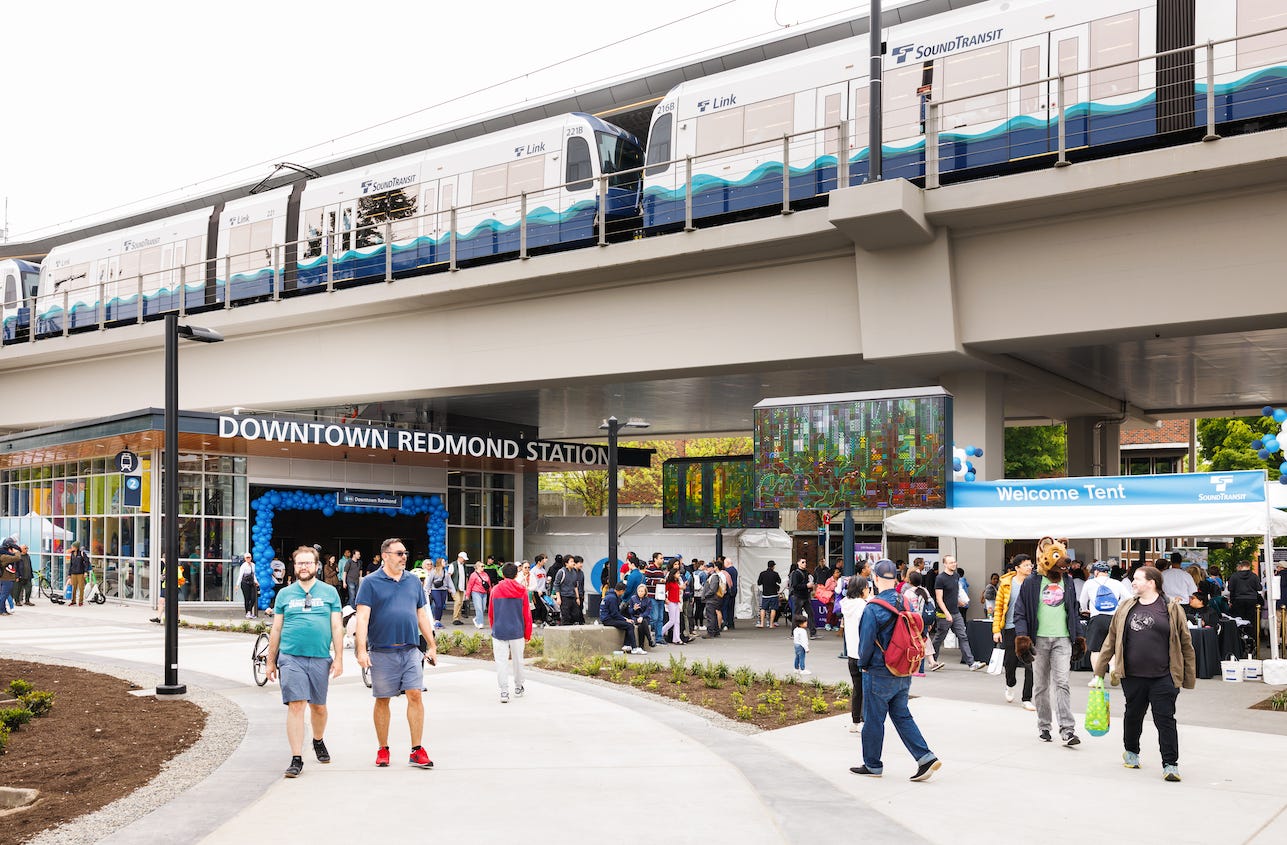
Sound Transit, the regional authority serving the Puget Sound region of Washington state, provides a clear illustration of how capital freed up by lower-cost debt on one set of projects effectively financed another. The authority refinanced approximately $3.3 billion worth of loans across five projects, enjoying an overall interest rate reduction of 82 basis points. The savings from reduced interest costs enabled the funding of a sixth loan to support its Downtown Redmond Link Extension.
The Hampton Roads Regional Priority Projects in Virginia provide another example.
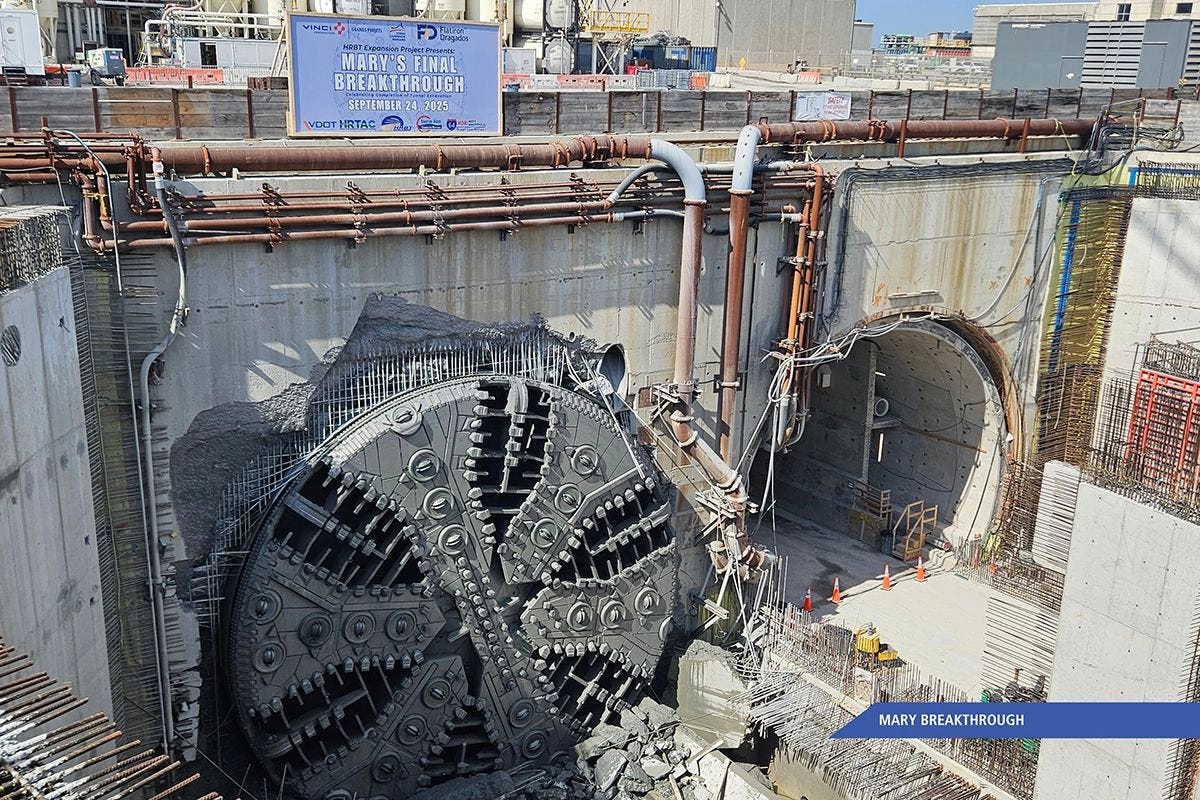
Utilizing TIFIA, an original loan principal of $501 million principal was expanded to $1.66 billion through reissuance, the largest increase of any refinancing in the study’s sample. This enabled the addition of the Hampton Roads Bridge-Tunnel Expansion to their ambitious program..
“By bundling a series of roadway and bridge projects, this project presented a compelling case for using refinancing savings to expand the original scope.”
Across the full sample, the positive impact of TIFIA is consistent: an average 90-basis-point reduction in interest rates, leading to roughly $80 million in aggregate interest savings on the refinanced loans, all achieved through a program designed to require minimal direct federal funding.
Why Has TIFIA Only Lent $37 Billion in 28 Years?
Given TIFIA’s success applying a $1 billion federal commitment to responsibly unlock $12 billion in direct loans, along with considerably more through third-party involvement, there is greater potential for the program than the approximate $37 billion in direct loans secured during its history. This gains additional significance when considering how America’s infrastructure investment gap is measured in trillions of dollars.
Sever’s study points out TIFIA underutilization, as the program still has funding available for additional projects.
“As of the end of FY 2018, DOT reported $1.65 billion dollars in unobligated budget authority for TIFIA. Notably, the trend of underutilization has continued; by the end of FY 2022, unobligated TIFIA budget authority had slightly increased to approximately $1.75 billion, reflecting the program’s ongoing challenges in converting authorized credit assistance into executed loan agreements.”
One of the challenges, as noted in research cited by this paper, is an application process that leans cautious in two directions.
“Outcome evaluations for the Bureau’s credit programs reveal a propensity for risk aversion in its credit allocation decisions… another concern lies in the Bureau’s conservative methodology for calculating the program’s subsidy cost, potentially constraining its lending capacity.”
Combined with an application and approval process borrowers describe as slow and document-heavy, even creditworthy sponsors may simply decide the effort isn’t worthwhile.
Despite historically low interest rates, just 20 out of 70 TIFIA loans active at the start of the pandemic completed refinancing. While the study does not fully explain the reasons for a 28.5% applicant success rate, but this gap between who could have benefited and who actually did is itself a finding.
The Takeaway
TIFIA’s COVID-era refinancing is a success story: a small, well-structured federal credit exposure converted into billions of cheaper, more flexible infrastructure financing that borrowers directed into construction, expansion, and project completion.
At the same time, it’s also a story about a tool that’s being used well below capacity.
“Previous literature suggests that the Bureau’s conservative approach to project selection may have led to underutilized budget resources and reduced program effectiveness,” Sever stated. “While this study did not directly examine this issue, the findings underscore the need for regulatory flexibility in refinancing rules to enhance the allocative effectiveness of the Bureau’s credit assistance programs.”
This research is published and available to read in the online edition of Public Budgeting & Finance.
