

Regularly, Public Budgeting & Finance dedicates issues to research focused on specific topics in the broad field of government and nonprofit financial management. Recent-published special issues and symposia featured articles tied around the themes of “Advancing the Federal Budget Debate” and “Property Tax Administration.”
Currently, our journal is requesting proposals for a special issue on a specific and emerging element in the study of taxation: the environment. Edited by Kenneth R. Richards, Professor with the Paul H. O’Neill School of Public and Environmental Affairs at Indiana University, this future edition is intended to provide “a thorough, scholarly-based understanding of environmental taxation and administration” applicable to furthering government application of principles associated with environmental economics.
It’s More Than Collecting Revenue
Utilizing market principles, environmental economics evaluates activity with respect to its impact on natural resources, subsequently developing solutions and policies to achieve sustainable outcomes. While most associate tax policy as a means of generating revenue, its noted ability to influence behaviors is further applicable with respect to achieving environmental goals, such as the reduction of carbon emissions.
Research and evaluation of the development and implementation with respect to environmentally-oriented tax policy needs further growth, and as noted in the RFP, this special issue is another step in building this important base of knowledge:
“This special issue is designed to explore why and how governments adopt environmental taxes, the impact of such decisions, and why the design and efficacy of those taxes so often deviate from the ideal version expounded in economic theory.”
Scholars are encouraged to submit abstracts for research projects related to this subjects, incorporating one or a combination of formal analytical modeling, empirical analysis, case studies, and legal analysis. Key topics this special issue seeks to address include the following:
The legal, institutional, and political factors that have influenced environmental and carbon tax design choices (broadly or in a single jurisdiction).
Carbon tax policy reforms across countries.
Trade-offs between various energy and environmental tax credits and deductions.
The environmental implications of changes in energy and environmental taxes (such as gasoline taxes).
The policy and budgetary implications of environmental tax reforms on pollution emissions and environmental quality, economic efficiency, revenue production, transparency, and income distribution.
Environmental regulation and taxation: complements or substitutes?
Optimal design and implementation of environmental regulation and taxation.
Scholars and practitioners should submit their abstracts (2,500 words or less) by email to pbaf@iu.edu no later than October 15, 2026, for consideration in this special issue. Questions can be directed to Kenneth R. Richards (kenricha@iu.edu), or to Public Budgeting & Finance Co-Editors Craig Johnson (crljohns@iu.edu) and Justin Ross (justross@iu.edu).
Perspective authors are encouraged to review the guidelines available at the Public Budgeting & Finance website before submitting abstracts.
Reviewing Prior Journal Work on Environmental Finance
The upcoming special issue on environmental taxation furthers growing research by public finance scholars with respect to revenue, allocation, and impact and management of natural resources. Two recent articles from Public Budgeting & Finance shared important examinations in the areas of equitable utility costs and taxation of renewable energy generation.

In 2024, an article from Kate Albrecht, Deborah A. Carroll, Amanda Kass, Jason Michnick, and Brooke Wetmore assessed the growing claim that local water utility rates were disproportionately higher for minority-majority customer groups. Their research found, when controlled for service infrastructure quality, rates were consistent across racial makeup.
As discussed in a 2025 PBAF News post, this research does not dismiss the importance of evaluating racial equity and further directs attention to other contributing factors, such as the need to ensure access to resources for infrastructure investment and improving local water quality:
When asked about possible solutions, Carroll (Director of the Government Finance Research Center at the University of Illinois Chicago) said: ‘As part of a broader study conducted for the Illinois General Assembly, we proposed a number of policy solutions.” These included strategic municipal investment in disadvantaged communities, which could fund technical maintenance, and state-level programs to target aging infrastructure.
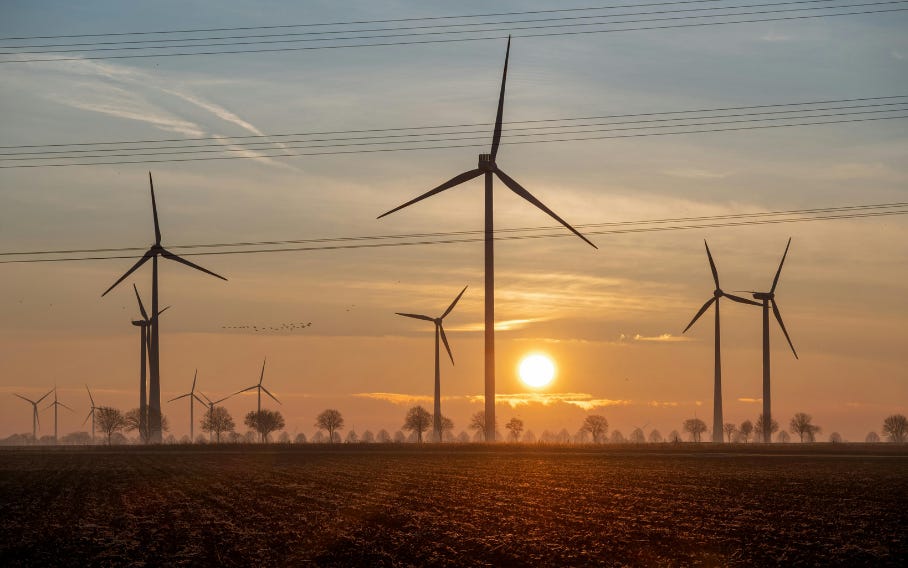
In 2022, Eric Brunner and David Schwegman published an article in our Journal examining the impact of wind energy installations on the revenues and expenditures of county-level governments. Reviewing data from 1995 to 2017, the pair found that windfarms generated a positive impact on local jurisdiction revenues, with these proceeds contributing to local capital investments, specifically transportation and hospitals.
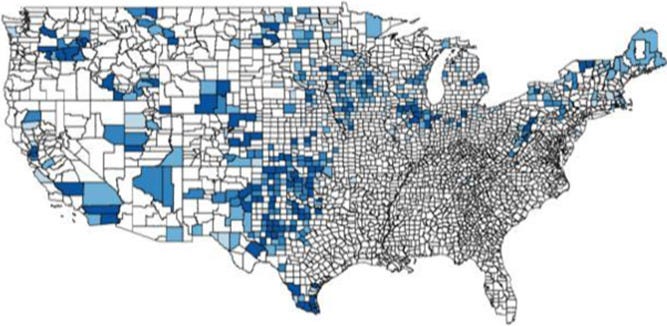
Bruner and Schwegman further found that while increased revenues did not result in changes to local property tax rates, investments in wind energy did correlate with increased residential values:
“Policymakers and scholars know very little about how counties respond to increases in their local tax base, or how they would choose to allocate funds for local public services in response to windfall revenue. Our paper seeks to fill that gap. We find that counties increase their expenditures and revenues (own‐source revenue, in particular) and provide, at most, modest property tax relief in response to exogenous increases in their local tax base due to wind energy installation. We also find that counties use this windfall revenue to prioritize spending on highways and hospitals. Finally, we find evidence that the fiscal and amenity effects induced by wind energy installations are capitalized into home values.”
Albrecht and her colleagues’ article, “Fiscal institutions and racial equity: Determining the price of water,” appears in Issue 44 (2) of Public Budgeting & Finance, with a summary and discussion available at PBAF News.
Bruner and Schwegman’s article, “Windfall revenues from windfarms: How do county governments respond to increases in the local tax base induced by wind energy installations?” appears in Issue 42 (3) of Public Budgeting & Finance.