

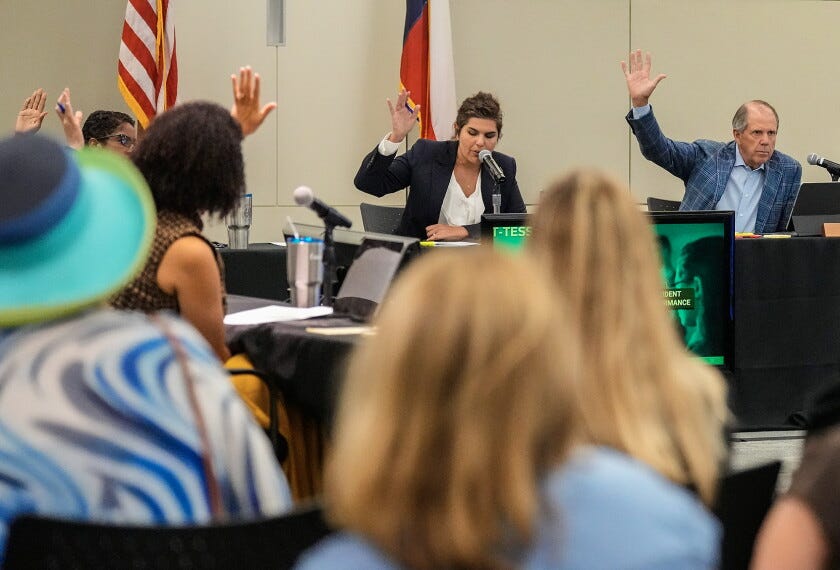
The recent election results reflected considerable dissatisfaction on the part of voters with government across all levels. This includes local governments, which have traditionally been amongst the most trusted. Recent survey analysis shows significant loss of trust across all branches in recent years, with perceptions across local, state, and federal government far below the majority of respondents.
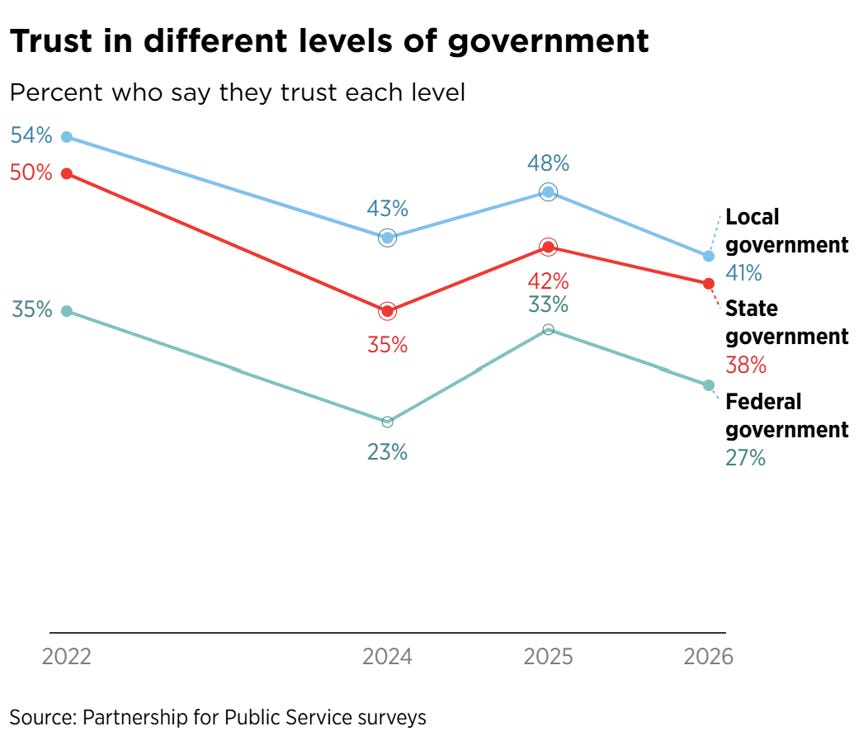
Increasing distrust leads to increased friction and disagreement between citizens, administrators, and elected officials. A distrusting environment also exhibits itself in elections, whether in the candidates chosen for leadership offices or proposed changes in tax policy.
Recent research by Eric J. Brunner, David J. Schwegman, and Bill Simonsen finds this growing distrust with local jurisdictions may be influenced by growing diversity of ethnicities within their respective populations. Focusing on Hispanic populations, their recent article suggests that distrust may be influenced by demographic changes, an indicator of broader influences eroding civility and challenging the ability of local jurisdictions to fiscally fulfill expected responsibilities.
Examining the Issue
Brunner, Schwegman, and Simonsen build their work on top of significant prior research across disciplines arguing a direct relationship between racial and ethnic diversity with the lack of proper funding for government services. To further establish this correlation, the authors hypothesize that growing shares of Hispanic students in local school districts leads to weakening of trust in the school systems by non-Hispanic Whites and increased opposition to the tax rates necessary for effective operation. An additional hypothesis argues inversely that trust in public schools and support for necessary taxation increases with Hispanic residents as their share of population grows.
The analysis for this project incorporates the results of a fall 2022 national field survey of 18,720 individuals with demographic data on the corresponding school districts of respondents in 1980 and 2022. Survey responses focused on gauging respondent trust in their local governments and support or opposition to increased local taxes for schools. The population statistics serve to determine change in the share of Hispanic residents for each district, as well as provide additional socioeconomic variables.
Applying both ordinary least squares (OLS) and instrumental variable identification (IV), the authors find consistently strong correlations between growing Hispanic share of population and declining trust in public schools by non-Hispanic Whites. Using OLS, the results indicate an approximate 2.4-point decline in strong school district support amongst non-Hispanic Whites per 10-point increase in Hispanic share, while the decline of trust is calculated at just under 3 points utilizing IV. These results are further reinforced by testing other potential variables, including proximity of survey respondents to the US-Mexico border, child poverty rates, and test scores.
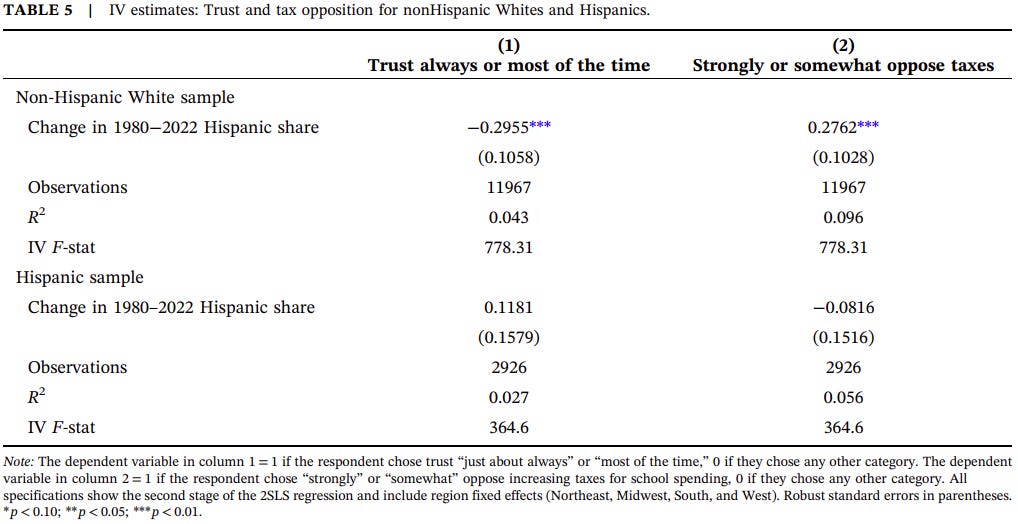
With respect to opposition of additional taxes for schools, the IV panel finds a 2.8-point increase in opposition for non-Hispanic Whites per 10-point increase in Hispanic share. At the same time, while the inverse coefficients (increased trust in schools and lower tax opposition) are also found in the results for Hispanic respondents, neither are statistically significant enough to confirm the second hypothesis.
Improving our Understanding
Brunner, Schwegman, and Simonsen’s research arrives in a period where growing local ethnic diversification is taking place alongside changes in viewpoints expressed by majority groups on the role of government and the level of taxation required to maintain it. While demographic forecasts estimate that the share of residents classified as “White” will become a minority by 2045 (less than 20 years from now), this reality is already present in many communities across the country, influenced in large part by considerable increases in local Hispanic populations. Furthermore, as of 2020, more than 52% of the national population under the age of 18 is nonwhite.
Education and other government programs require funding, and a population unwelcome to providing the necessary resources through taxation to enable successful delivery should be treated as a serious challenge.The growing heterogenous makeup of our population, nationally and locally, poses natural challenges in finding common ground across cultures and beliefs, as well as overcoming historical issues involving oppression and discrimination. The authors’ article provides another important factor for consideration as citizens, elected officials, and administrators work to reestablish and grow civility and common purpose, especially for ensuring that key public functions like quality childhood education are available to every family.
Brunner, Schwegman, and Simonsen’s article, Demographic Change and Citizen Support for and Perceptions of Local Government, appears in issue 46(1) of Public Budgeting and Finance.