
When bonds are on the ballot, the stakes couldn’t be higher; that single vote could be the difference between making a critical community investment, and kicking a can down the road. Voter communication is important to get right.

In Bonds on the Ballot, researchers analyzed survey data to uncover voter knowledge bases, preferences, and how they respond to different explanations of bond measures. They found voters don’t necessarily understand the fiscal implications of their vote.
“Only about half of voters can identify how bonds are financed,” says Shanna Pearson-Merkowitz, one of the researchers from the University of Maryland leading the study.
And if that’s the case, how can policymakers effectively and transparently propose bond initiatives? Person-Merkowitz’s research carries an important lesson for city managers, school board officials, and local government leaders: small changes in how bonds are presented significantly influence whether or not they pass.
Why Do Bonds Go to a Public Vote, Anyway?
The logic is straightforward.
Requiring a public vote acts as a safeguard against excessive borrowing. Putting decisions directly in the hands of taxpayers ensures communities only take on long-term obligations where there is clear support, disregarding the rest.
In practice? Reality may not produce the results we’d hope for.
In multiple-choice format, only about half of respondents correctly identified that bonds must be repaid with interest.
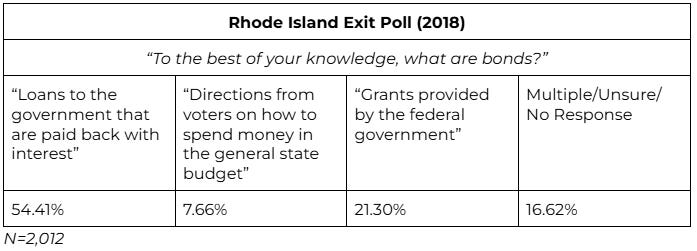
Professor Person-Merkowitz expands, drawing on current literature:
“Observational and experimental research suggests voters lack basic knowledge. They’re prone to cost misperception, aren’t influenced by the cost of a bond even when it well exceeds what the government can afford, and it even appears a bond’s placement on the ballot has the largest impact, despite having no impact on fiscal implications.”
But if voters don’t fully understand how to meaningfully evaluate bond measures, should they be tasked with the decision in the first place?
According to Person-Merkowitz, perhaps they shouldn’t:
“The rationale [preventing the legislature from burdening the public with excessive debt] is difficult to justify. It’s not clear whether voting requirements succeed in protecting against legislative short-sightedness… Consideration should be given to eliminating the requirement.”
Nevertheless, it’s difficult to imagine a scenario where we eliminate bond mandates. Under the status quo, how do voters behave? And how might we use this information?
What Influences Voter Behavior?
“Voters do not understand the difference between bonds and taxes. Even a small amount of information about how bonds are financed can significantly reduce voter support,” Person-Merkowitz explains.
The following statement, split between control and experimental survey groups, lowered support for bonds from ~82% to ~67%.
“Generally speaking, are you in favor of or opposed to using bonds, which have to be paid back with interest, to pay for local projects like schools, roads, and other community resources?”
So, providing a very simple explanation of bonds — merely eight words in Person-Merkowitz’s experimental design — drops support by a significant margin, and perhaps enough to change the outcome of a bond election.
Importantly, that decline doesn’t reflect opposition to the projects behind investments.
“What surprised us,” Person-Merkowitz begins, “was when people learned how bonds actually work, they became more supportive of using taxes to fund city projects, rather than less supportive of spending altogether.”
In other words, voters may be rejecting the financing mechanism rather than the projects themselves.
Given that, how might public officials more effectively champion public investments?
Takeaways for Bond Referendums
If small changes in framing can influence outcomes, then communication strategy becomes central.
Person-Merkowitz shares a clear suggestion:
“If you want a bond measure to pass, avoid emphasizing how bonds are paid for and what they will cost. Focus instead on what bonds will do and what the community will gain. Higher teacher retention leading to improved test scores, a new recreation center to bring residents together, fewer potholes, and lower car repair bills. Lead with tangible benefits, not financing mechanisms.”
Conversely, if public officials prefer to raise taxes, sharing how bonds actually work may increase support for alternatives.
However, Person-Merkowitz conclude research by asking whether bond mandates are effective decision-making mechanisms to begin with.
“Kogan (2025) argues the root of the problems with K-12 education is due to local democratic control… There is some evidence school board officials set bond proposals at lower amounts than necessary over concerns of voter disapproval… Other modern means exist to create a check on unwise legislative bond spending… By contrast, the election requirement appears to be an anachronism.”
Shanna Pearson-Merkowitz’s and colleagues article, Bonds on the Ballot: What Voters (Don’t) Know About Debt Financing and Why It Matters, appeared on EarlyView in February 2026 of Public Budgeting & Finance.
Our stories may be republished online or in print under Creative Commons license CC BY-NC-ND 4.0. We ask that you edit only for style or to shorten, provide proper attribution and link to our website. AP and Getty images may not be republished.